
Change
AI Outfit Changer Prompt: Name the exact garment or outfit that should replace the current clothing. A blazer, cropped jacket, satin dress, knit top, wide-leg trousers, or complete coordinated look gives the model a concrete starting point.
An AI Outfit Changer Prompt describes the outfit, controls fit, fabric, and styling, preserves the original person, and makes each refinement easier to evaluate.
A strong AI Outfit Changer Prompt moves from the main visual decision to supporting details. The order below gives the model a useful hierarchy and gives you a repeatable checklist.
AI Outfit Changer Prompt: Name the exact garment or outfit that should replace the current clothing. A blazer, cropped jacket, satin dress, knit top, wide-leg trousers, or complete coordinated look gives the model a concrete starting point.
AI Outfit Changer Prompt: Describe the silhouette with visual terms such as tailored, oversized, relaxed, fitted, cropped, structured, flowing, straight-leg, high-waisted, or softly draped.
AI Outfit Changer Prompt: Use fabric words that imply texture and light behavior: matte wool, washed denim, crisp cotton, soft knit, linen, suede, leather, velvet, chiffon, or reflective satin.
AI Outfit Changer Prompt: Name a precise color or a restrained palette. Deep navy, warm ivory, charcoal gray, rust, sage, and burgundy communicate more than vague phrases such as nice or fashionable.
AI Outfit Changer Prompt: Add the use case when it affects styling: business meeting, weekend city walk, summer holiday, wedding guest look, evening event, editorial shoot, or everyday wardrobe.
AI Outfit Changer Prompt: Finish by protecting identity and composition. State that the person, face, hair, expression, body proportions, pose, hands, camera angle, background, crop, and original lighting should remain consistent.
Begin with an action such as replace, change only, restyle, or keep the design but change the color. Then identify the garment and describe the silhouette. Material and color come next because they influence texture, folds, highlights, and visual weight. Add the occasion only when it helps resolve styling choices.
Finish with a preservation line. This separates the requested edit from the visual information that already works. It is especially important when you want to change one jacket or dress without also changing the face, body, background, or surrounding clothing.
Replace [current clothing] with [garment or outfit]. Use a [fit] silhouette in [material] and [color], styled for [occasion]. Adapt it naturally to the person's pose with realistic seams, folds, perspective, and shadows. Preserve [identity and scene details].
You do not have to fill every slot. When the clothing reference clearly shows the material and color, focus the text on fit and preservation. A concise prompt that resolves ambiguity is more useful than a long prompt that repeats the image.
Each current homepage example shows a complete outfit direction so you can inspect how structure, color, pose, and context carry through the edit.
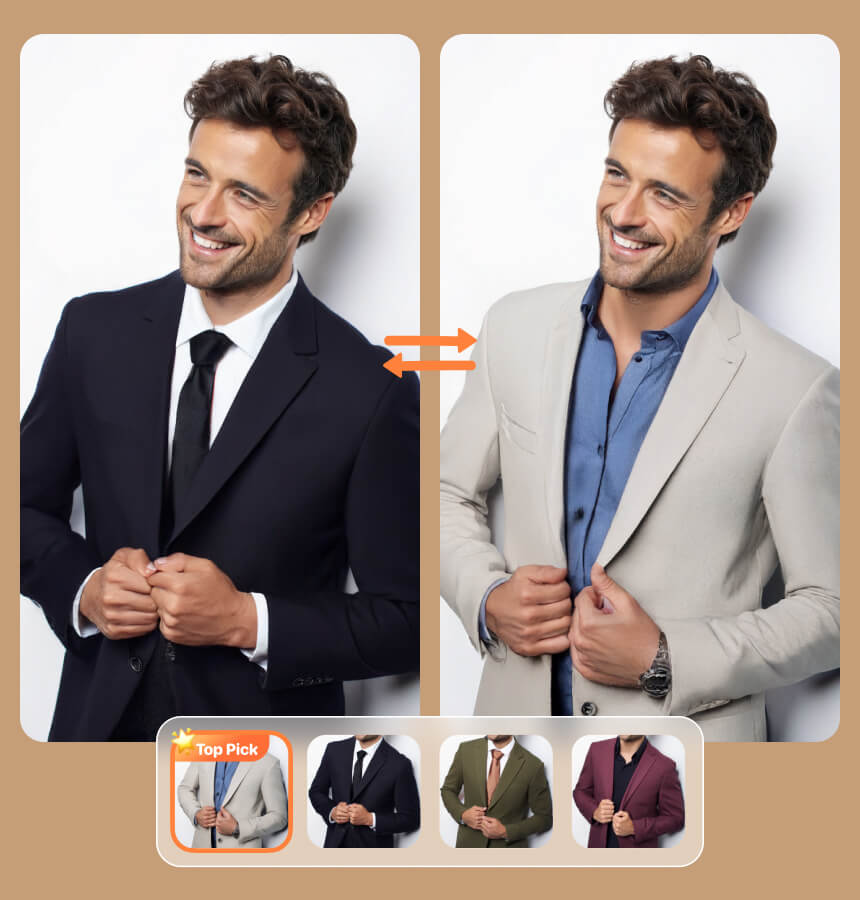
AI Outfit Changer Prompt: Define the suit structure, lapel shape, clean layering, and restrained palette while preserving the people, stance, framing, and studio light.
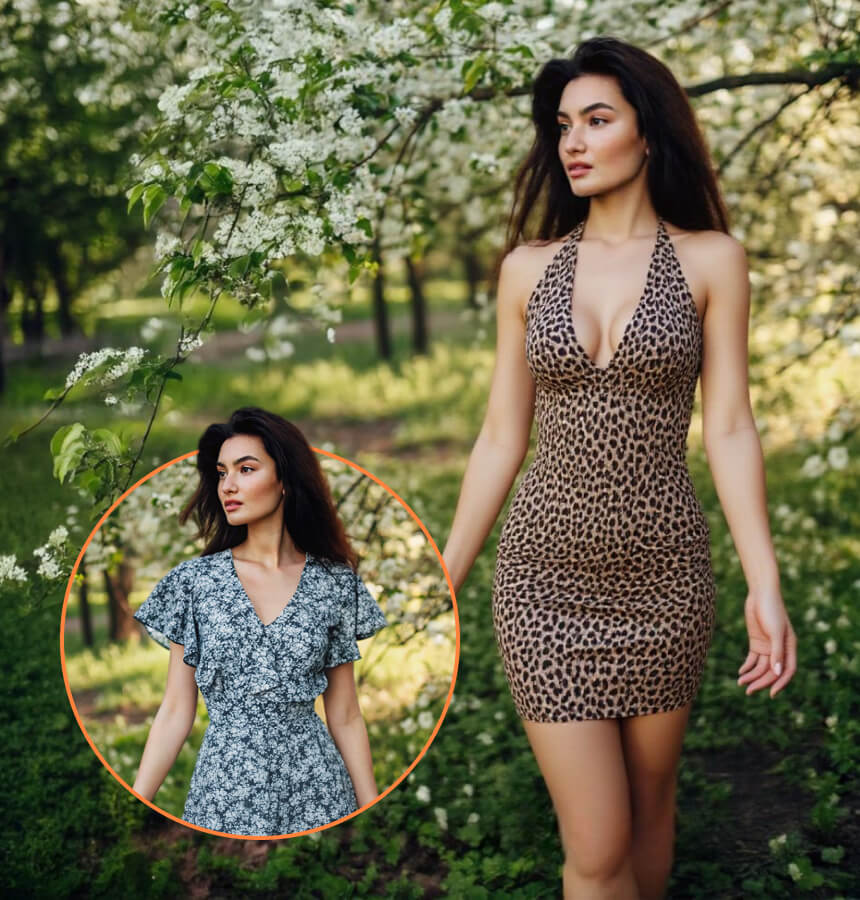
AI Outfit Changer Prompt: Describe the swimwear silhouette, color, and lightweight cover-up while keeping the same body position, coastal light, and relaxed setting.
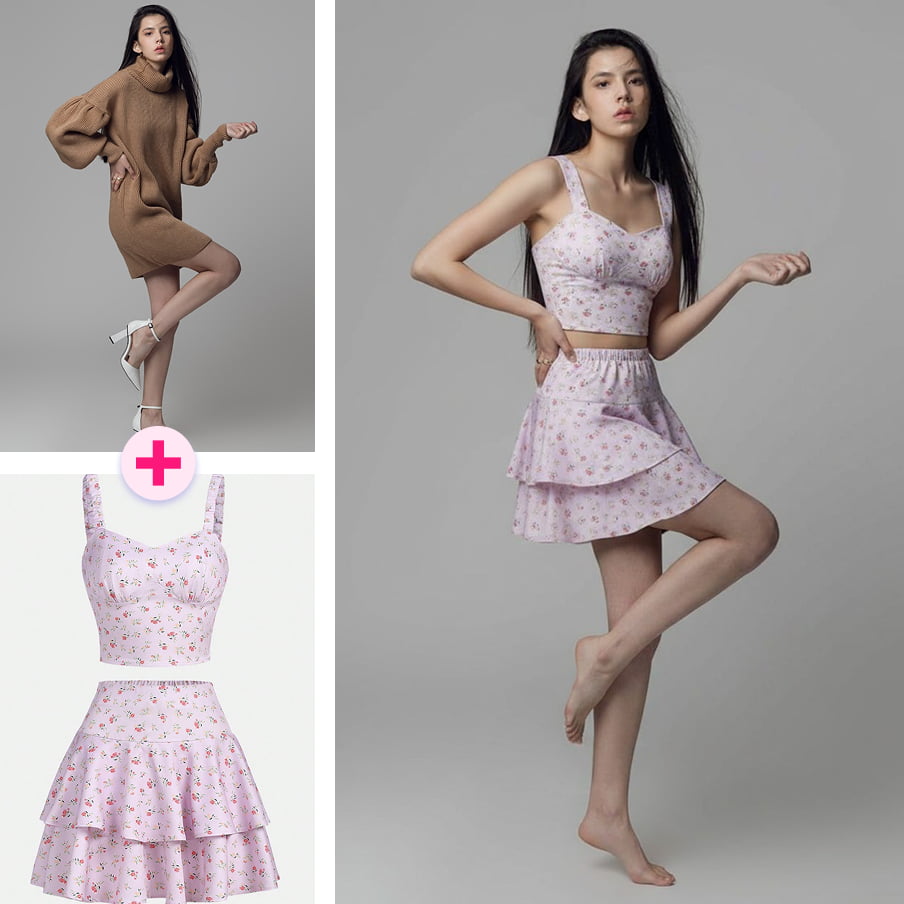
AI Outfit Changer Prompt: Name the everyday layers, relaxed proportions, and footwear direction so the final outfit feels coherent without changing the person or composition.
Replace garments, colors, materials, and occasions to match your idea. Keep the preservation language, then refine the first result one visible detail at a time.
AI Outfit Changer Prompt: Replace the current clothes with a premium modern streetwear outfit: an oversized charcoal bomber jacket, clean white heavyweight T-shirt, relaxed black cargo pants, and minimal sneakers. Preserve the same person, face, body proportions, pose, hands, background, and lighting. Use realistic fabric texture, natural folds, accurate layering, and soft contact shadows.
Try this AI Outfit Changer PromptAI Outfit Changer Prompt: Change the outfit to a tailored deep navy suit with a soft ivory shirt, contemporary fit, subtle texture, and understated silver accessories. Keep the person and scene unchanged. Match the original light direction and create believable shoulder structure, lapels, seams, buttons, shadows, and wool fabric drape.
Try this AI Outfit Changer PromptAI Outfit Changer Prompt: Replace the existing outfit with a camel blazer over a fine black knit top, straight-leg dark trousers, and clean leather loafers. Keep the styling refined and approachable rather than formal. Preserve identity, expression, pose, crop, office background, and original light. Make the layers sit naturally at the collar, waist, and sleeves.
Try this AI Outfit Changer PromptAI Outfit Changer Prompt: Restyle the person in a breathable cream linen shirt and coordinated high-waisted shorts in a warm neutral palette. Add simple leather sandals and minimal jewelry. Maintain the original facial features, body, pose, environment, camera perspective, and natural sunlight. Show believable linen texture, gentle wrinkles, and relaxed movement.
Try this AI Outfit Changer PromptAI Outfit Changer Prompt: Create an elegant evening outfit with a refined black satin dress, clean neckline, softly draped silhouette, and minimal metallic accessories. Preserve the same person, skin tone, face, hair, expression, and body proportions. Keep the location unchanged and make the satin reflections and shadows consistent with the original scene.
Try this AI Outfit Changer PromptAI Outfit Changer Prompt: Change the clothing to a sophisticated sage green midi dress with a softly structured waist, fluid skirt, modest neckline, and delicate neutral accessories. Keep the look celebratory without resembling bridal wear. Preserve the person, pose, hands, background, composition, and lighting, with realistic fabric folds around the seated position.
Try this AI Outfit Changer PromptAI Outfit Changer Prompt: Replace the current clothes with a long camel wool coat over a charcoal turtleneck and tailored black trousers. Keep the existing shoes unless they are hidden. Show realistic coat weight, lapels, sleeve folds, and layered edges. Preserve the person, face, hair, posture, city background, camera angle, and cool outdoor lighting.
Try this AI Outfit Changer PromptAI Outfit Changer Prompt: Restyle the clothing as a tasteful 1970s-inspired look with a fitted rust knit top, high-waisted wide-leg trousers, warm earthy colors, and subtle period details. Keep the interpretation wearable rather than costume-like. Preserve the photo composition, person, face, hair, hands, background, perspective, and original light.
Try this AI Outfit Changer PromptAI Outfit Changer Prompt: Change the complete outfit to a coordinated ivory monochrome look with a clean sleeveless top, softly tailored wide-leg trousers, tonal belt, and restrained accessories. Use subtle differences in texture so the pieces remain distinct. Preserve the same person, body, pose, camera angle, background, and natural shadow direction.
Try this AI Outfit Changer PromptAI Outfit Changer Prompt: Change only the current jacket to a cropped tan suede jacket with realistic stitching, soft texture, fitted cuffs, and natural folds. Do not alter the shirt, pants, shoes, accessories, person, face, hair, pose, hands, background, crop, or lighting. Ensure the new jacket follows the shoulders and arm position.
Try this AI Outfit Changer PromptAI Outfit Changer Prompt: Keep the exact garment design, fit, seams, material, folds, and styling, but change its color from bright red to deep forest green. Do not modify any other clothing item, accessory, facial feature, body detail, pose, background element, camera setting, or light. Preserve realistic highlights and shadows on the recolored fabric.
Try this AI Outfit Changer PromptAI Outfit Changer Prompt: Transform the outfit into a sculptural editorial look with an asymmetric black jacket, precise architectural folds, matte technical fabric, and one restrained silver accent. Keep the art direction bold but preserve the original person, identity, pose, crop, background, and light source. Integrate the garment naturally instead of changing the entire photograph.
Try this AI Outfit Changer PromptA clothing description explains the change. A preservation instruction protects the identity, composition, and scene you already like.
Prioritize the details that matter most instead of assuming that unchanged elements will be preserved automatically.
Preserve the same person, face, hair, expression, skin tone, body proportions, pose, hands, camera angle, crop, background, depth of field, and original lighting. Change only the requested clothing.
Useful fit terms describe geometry: fitted through the waist, relaxed at the shoulders, cropped above the hip, high-waisted, straight-leg, softly draped, structured, or oversized. Avoid relying on subjective labels such as perfect, expensive, or beautiful unless you also explain what those ideas should look like.
Fabric language affects surface and movement. Linen has visible weave and casual wrinkles; satin produces smooth highlights; wool appears denser and more matte; chiffon is light and translucent; leather creates firmer folds and controlled reflections. Pairing a material with a fit gives the model stronger physical cues.
Color descriptions work best when they are specific but not overloaded. Name one dominant color and, if necessary, one or two supporting neutrals. A warm ivory linen set with tan leather accessories is easier to coordinate than a request containing six unrelated colors. For a single color edit, explicitly preserve garment design, material, seams, and folds.
Context can guide the degree of formality and accessory choice. A black dress for a business dinner should read differently from a black dress for an editorial shoot. Add that context after the visible clothing details so it supports the direction rather than replacing it.
Once the main outfit works, keep it stable and adjust a single visible quality. This creates a cleaner comparison and reduces accidental changes elsewhere.
AI Outfit Changer Prompt: Keep the outfit design unchanged, but make the blazer slightly more relaxed through the shoulders and waist. Preserve every other detail.
AI Outfit Changer Prompt: Extend the coat hem to mid-calf while keeping the same fabric, color, lapels, sleeves, person, pose, and background.
AI Outfit Changer Prompt: Change only the jacket material from glossy satin to matte wool with softer highlights and realistic woven texture.
AI Outfit Changer Prompt: Remove the necklace and bag. Keep the complete outfit, shoes, person, body position, crop, scene, and lighting unchanged.
Use the previous output as the new baseline when the interface supports refinement. Name the exact change, then restate that every other detail should remain consistent. If a revision introduces a new error, return to the last successful image instead of stacking another correction on top of it.
For larger creative changes, separate the work into stages: core garment, fit, material or color, then accessories. A staged process is slower than asking for everything in one sentence, but it makes the source of each improvement or regression easier to understand.
Most prompt problems come from ambiguity, conflict, or too many simultaneous changes—not from a lack of adjectives.
AI Outfit Changer Prompt: Prompts such as make it stylish or make it better do not define a visible target. Replace them with a garment, silhouette, material, color palette, and occasion that can be represented in the image.
AI Outfit Changer Prompt: Minimal, ornate, vintage, futuristic, distressed, and formal can pull the edit in different directions. Choose one primary aesthetic and at most one supporting influence for the first generation.
AI Outfit Changer Prompt: A new background, pose, hairstyle, camera angle, and wardrobe create too many competing tasks. Complete the clothing transfer first, then make a separate edit if a different environment is genuinely necessary.
AI Outfit Changer Prompt: Length is not the same as clarity. Put the requested clothing first, follow with fit and fabric, and finish with preservation. Remove details that the reference image already communicates well.
AI Clothes Changer generates a visual interpretation from the person photo, clothing reference, and text. Fine typography, brand marks, repeating patterns, exact construction, hidden garment areas, and precise color can change. Always inspect the output before sharing it as a representation of a real product.
The image also cannot verify size, comfort, material quality, availability, or how a garment behaves during movement. Use the result for inspiration, comparison, and communication, then confirm purchase decisions with measurements and real product information.
Only use source photos and clothing images you have the right to process. Follow the complete outfit editing workflow when preparing inputs, check the resolution and credit options before generating, and read the AI output disclaimer before relying on a result in a public or professional context.
Read the complete workflowPractical answers about prompt length, reference images, negative instructions, ignored details, and exact garment reproduction.
AI Outfit Changer Prompt: A useful prompt is often two to five sentences: one for the requested clothing, one for fit and material, one for visual integration, and one for preservation. Add length only when it resolves a real ambiguity.
AI Outfit Changer Prompt: Not always. A clear reference can define the outfit on its own. Use the prompt for fit, styling, preserved items, or contextual details that are not obvious from the two images.
AI Outfit Changer Prompt: Direct boundaries can help, especially for single-item edits. State what should not change in one concise preservation sentence instead of adding a very long list of abstract negative terms.
AI Outfit Changer Prompt: The request may contain competing instructions, the source image may hide the relevant area, or the reference may not show the requested detail. Simplify the task and test one priority at a time.
AI Outfit Changer Prompt: No prompt guarantees exact construction, text, logo, pattern alignment, color, or fit. Treat the output as a creative visualization and compare it with real product information before making decisions.
Upload a person photo and a clear clothing reference, then customize one of the twelve examples above.